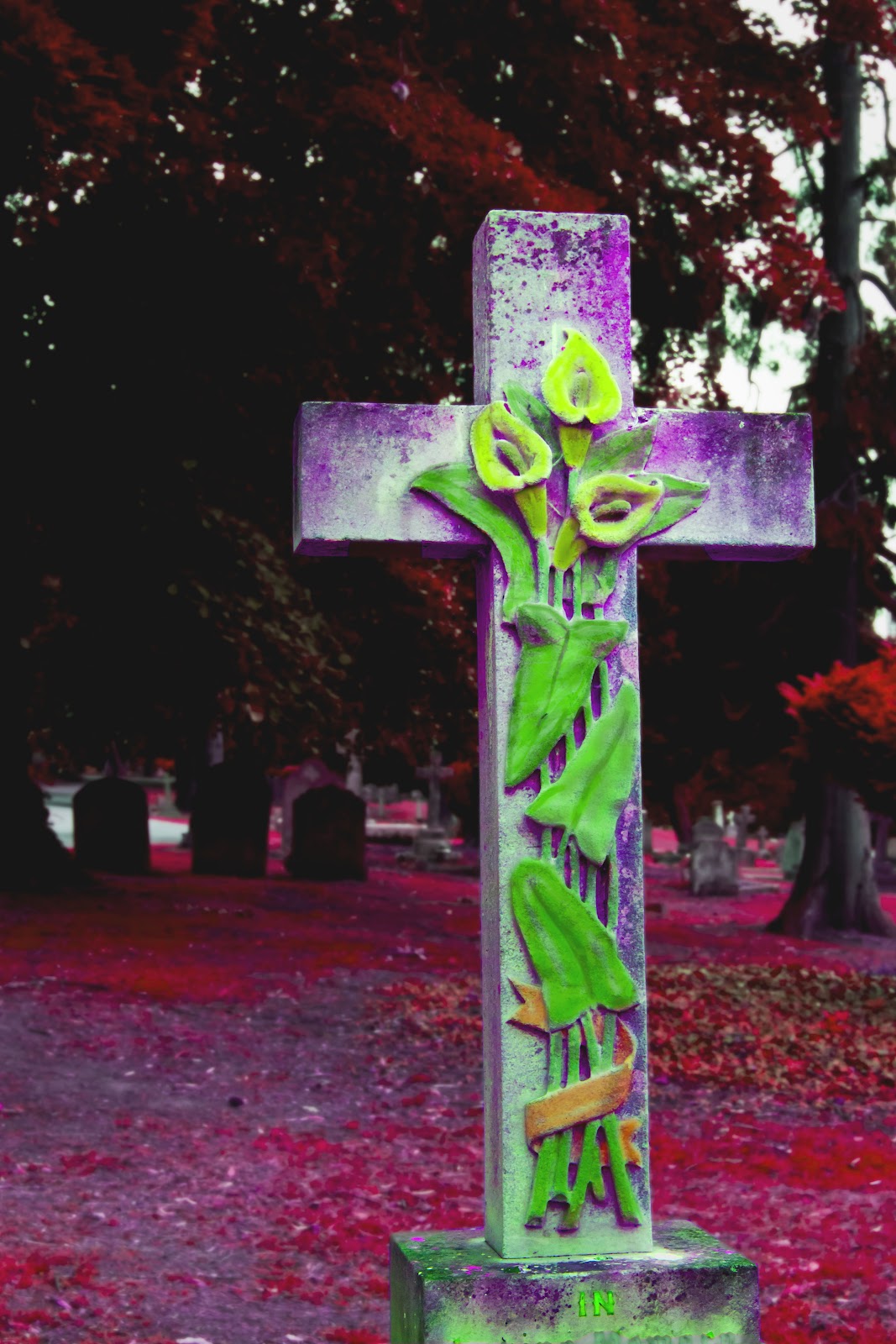
West Norwood Cemetery
Opened 1837

 West Norwood Cemetery Began its life in 1836 when William IV was king of England. For those of you have read my other blog post that I have done before will know that the church yards at that time in history were becoming overcrowded. So it was decide to build new cemeteries out in the suburbs of the city. The Magnificent Seven cemeteries were build over the next ten to fifteen years to resolve this problem which West Norwood is one of them. West Norwood Cemetery is an 40 acre site and opened its gates 1837. The cemetery is also known as the South Metropolitan Cemetery and was one of the first private landscape cemetery of its kind. The ground was consecrated by Bishop of Winchester on 7th December 1837 and burials started soon afterwards. The cemetery was designed by William Tite who was a director of the cemetery company and he designed all the landscaping and some of the monuments that are still there today. The cemetery was the first cemetery in the country to be be designed in the new Gothic style which became very popular in the mid 1800's.


 The cemetery was built on an ancient woodland called The Great North Wood which is how Norwood got its name. The trees in on the land were cleared for the cemetery but William Tite decided to keep some of them and in 2005 a survey of the trees in the cemetery. This survey found that there were fifteen oaks that predated the opening of the cemetery and one of them dated as far back has 1540-1640. There was also a maple and an ash tree as well.
 The original site included two Gothic chapels which were place at the crest of the hill which over look the cemetery. There was consecrated chapel that faced west. The entrance had two octagonal towers, and cloisters spanning over the Anglican catacombs. Just to the north was a Dissenters' chapel, which had a north facing entrance that had cloisters over its unconsecrated catacombs. During the WWII both chapels were damaged by V1 flying bombs. After the war the Episcopal was flattened and a memorial garden replace it covering its catacombs forever. The main office at the front of the cemetery was also damaged and was rebuilt in a more sympathetic style to its Gothic roots.
In the 1960s the cemetery was became neglected and overgrown with vegetation. Lambeth Council brought the site and which a 'lawn clearance' programe which resulting in the removal of over 10,000 memorials. The local council is working very hard to bring the cemetery back to its form glory. This has not been an easy task as the council wanted to sell the old graves that were over 75 years old. This would be so that that people of West Norwood could be buried in the cemetery. This was not to be the case as in 1994 a court ruled that council could not do this, has the cemetery was originally private and not a municipal cemetery, it would be illegal.
The cemetery to day is a very nice place to visit and lovely to look around. I hope you will enjoy the images that I have took of the cemetery's monuments.