Alexandra
Palace
The people's Palace
 The Hill where Alexandra
Palace now stands was originally part of Tottenham wood Farm. Has the
surrounding acres where sold off to be filled up with housing it left
the top of the hill free. It was thought that it was a good idea to
move the existing Alexandra Palace from Kensington to its new home
over looking North London. It was re-erected on the top of the hill and
opened for business in 1873. Only sixteen days after it opened a fire
broke out and the whole building was totally destroyed. During those
sixteen days of its opening the palace had attracted over hundred
thousand visitors which showed that Ally Pally had the potential to be
a major attraction in London.
The Hill where Alexandra
Palace now stands was originally part of Tottenham wood Farm. Has the
surrounding acres where sold off to be filled up with housing it left
the top of the hill free. It was thought that it was a good idea to
move the existing Alexandra Palace from Kensington to its new home
over looking North London. It was re-erected on the top of the hill and
opened for business in 1873. Only sixteen days after it opened a fire
broke out and the whole building was totally destroyed. During those
sixteen days of its opening the palace had attracted over hundred
thousand visitors which showed that Ally Pally had the potential to be
a major attraction in London.
 This helped the owners
to decide to rebuild the palace. Ally Pally was redesigned and rebuilt. It opened for business in May 1875. The palace was so popular that
it had its own railway station severing it. The railway was part of
the Northern Railway Company,s line and had its platform at the north
side of the palace which is still there today, but sadly it is not in
use. Alexandra Palace covers seven acres of land that had
ornamental lakes, funfair and sport facilities on it. The main
building had room for large exhibitions it also had a theater, a
library, a museum and a lecture hall and could stage concerts and
banquets.
This helped the owners
to decide to rebuild the palace. Ally Pally was redesigned and rebuilt. It opened for business in May 1875. The palace was so popular that
it had its own railway station severing it. The railway was part of
the Northern Railway Company,s line and had its platform at the north
side of the palace which is still there today, but sadly it is not in
use. Alexandra Palace covers seven acres of land that had
ornamental lakes, funfair and sport facilities on it. The main
building had room for large exhibitions it also had a theater, a
library, a museum and a lecture hall and could stage concerts and
banquets.

 Alexandra Palace also has a
big place in television history because of one very popular entertainment. That
entertainment was the birth of television or at leased the first
television broadcast that was transmitted from there on 2nd
November 1936. The BBC had leased the east wing of the building
earlier that year. There were two television studios on the second floor and
the transmitter was built on the top of the east wing tower. The
early days provided two different types of formats the Baird 240-line optical system and the Marconi-EMI 405-line system after only a year
the Baird system was phrased out has the other system was far better. In the early days the transmissions
could only reach a distance of 25 miles but this distance increased
over the years has new transmitters were add around London. The Ally
Pally transmitter kept on transmitting until the early 1950's when
the new Crystal Palace high powered transmitter took over. At the
same time the studio's closed and moved to there new location in Lime
Grove. In the early sixty's Television Centre opened in Wood Lane
and most of the productions were moved there. The news went on
producing its programs from Ally Pally until the early seventy's.
It was then moved to Television Center with all the other
programs. Alexandra Palace was then used has a production facility
for the program Open university and did so until 1980 when the BBC's
lease ended and the studio's finally closed.
Alexandra Palace also has a
big place in television history because of one very popular entertainment. That
entertainment was the birth of television or at leased the first
television broadcast that was transmitted from there on 2nd
November 1936. The BBC had leased the east wing of the building
earlier that year. There were two television studios on the second floor and
the transmitter was built on the top of the east wing tower. The
early days provided two different types of formats the Baird 240-line optical system and the Marconi-EMI 405-line system after only a year
the Baird system was phrased out has the other system was far better. In the early days the transmissions
could only reach a distance of 25 miles but this distance increased
over the years has new transmitters were add around London. The Ally
Pally transmitter kept on transmitting until the early 1950's when
the new Crystal Palace high powered transmitter took over. At the
same time the studio's closed and moved to there new location in Lime
Grove. In the early sixty's Television Centre opened in Wood Lane
and most of the productions were moved there. The news went on
producing its programs from Ally Pally until the early seventy's.
It was then moved to Television Center with all the other
programs. Alexandra Palace was then used has a production facility
for the program Open university and did so until 1980 when the BBC's
lease ended and the studio's finally closed. Also in 1980 HaringeyCouncil took over the daily running of the palace and its grounds.
Unfortunately in the same year a huge fire broke out in the great hall and
totally gutted the central part of the palace. It took another eight
years of restoration work before the Palace could open again which
it did in 1988.
Also in 1980 HaringeyCouncil took over the daily running of the palace and its grounds.
Unfortunately in the same year a huge fire broke out in the great hall and
totally gutted the central part of the palace. It took another eight
years of restoration work before the Palace could open again which
it did in 1988.
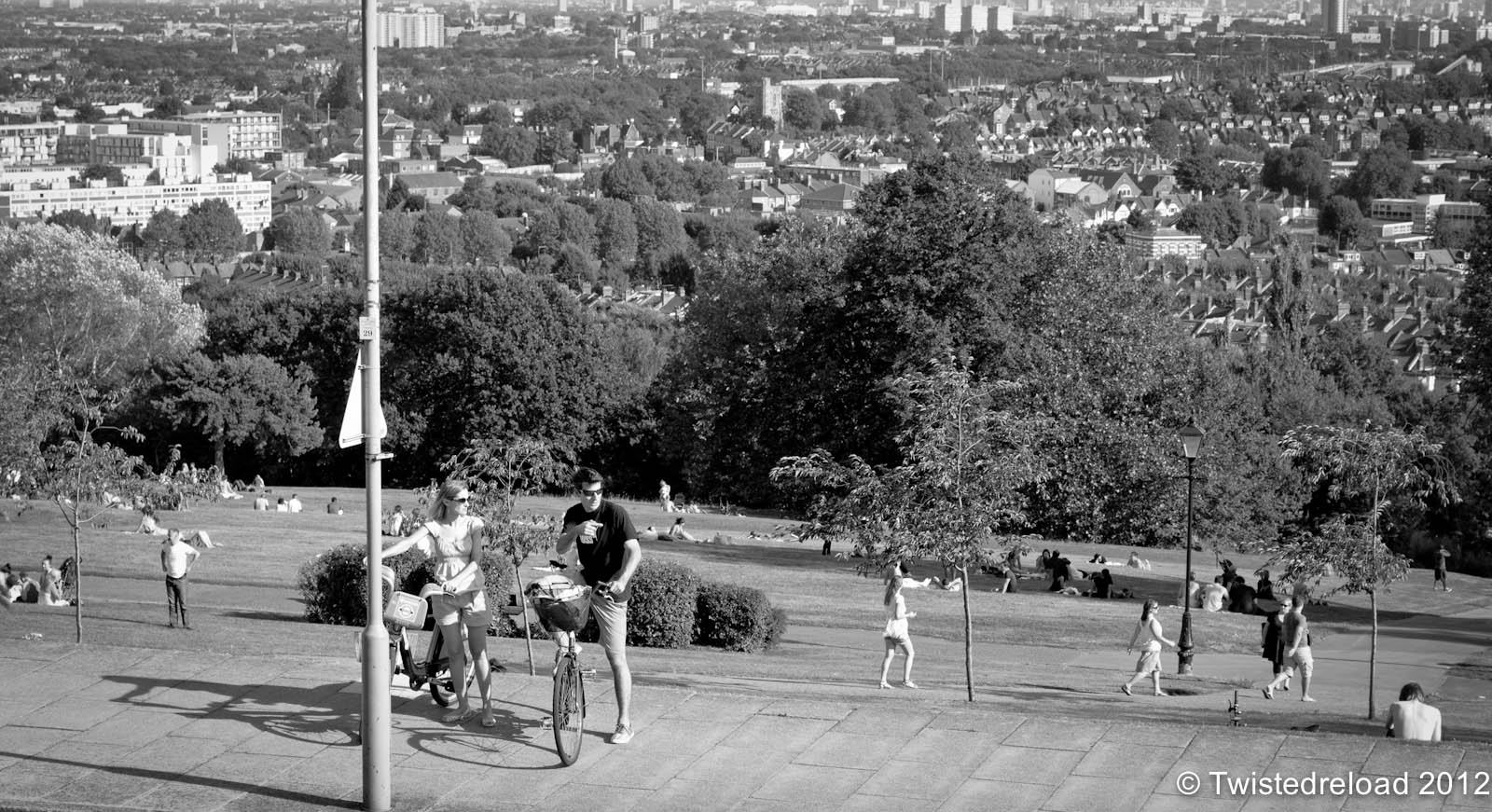
I have been visiting Ally
Pally from when I was a kid and I find it a wonderful place to visit
for the whole family. There is a boating lake and the view from the
top of the hill is excellent on a clear day. They have a fun fair
there two to three times a year. The great hall is still used today
for concerts and exhibitions truly grand but not has grand
has the original great hall that had a semi circle steel glass roof
before the big fire in 1980. A great place to go.